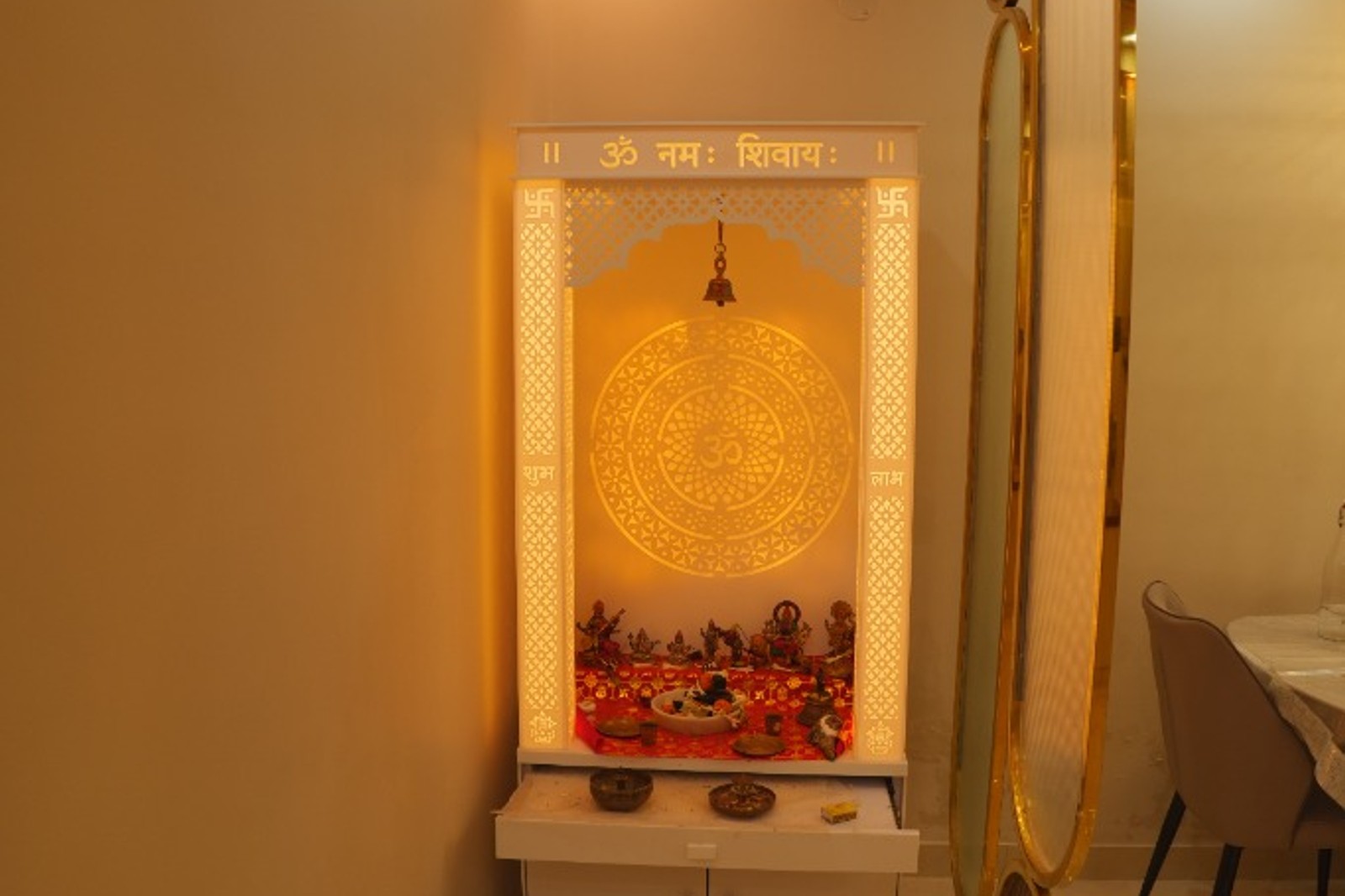
In most Bengali homes, the thakur ghar is the heart of the house. It is where the day begins with a lamp and a conch shell, where Lakshmi Puja is performed every Thursday, and where the family gathers during festivals. Even in a compact flat in New Town or a two-room home in Jadavpur, families want a dedicated, dignified space for prayer.
Designing that space well takes thought. It needs to feel sacred and calm, hold a surprising amount of puja items, handle smoke from incense and diyas, and still fit in with the rest of a modern home. Here are the ideas and practical tips we use when designing mandirs for families across Kolkata.
Choose the Right Type of Mandir for Your Home
1. A dedicated puja room
If you have a spare room or a large alcove, a separate thakur ghar is ideal. It allows a proper altar, a floor seating area for rituals, and storage for everything from the panjika to festival utensils. Keep the room bright, clutter-free and easy to clean.
2. A wall-mounted mandir unit
For most apartments, a wall-mounted unit in the living or dining area is the most practical choice. It takes up very little floor space, keeps the deities at eye level, and can include drawers and shutters below for storage.
3. A floor-standing mandir cabinet
A freestanding wooden mandir with closed cabinets below works well in homes where elders prefer to sit on the floor for puja. It can also be moved if the family relocates.
4. A niche or corner mandir
In very compact flats, a recessed niche in the wall or a corner unit can create a surprisingly beautiful space. Backlighting and a carved panel make even a small niche feel special.
Materials That Look Beautiful and Last
- Solid wood or veneer: Teak or sheesham veneer brings warmth and a traditional feel. Seal it well so that smoke and oil do not stain the surface.
- CNC-cut jali panels: Carved MDF or wooden jali panels with lotus, mandala or temple motifs, lit from behind, are one of the most popular choices today.
- Corian or solid surface: A seamless, white, easy-to-clean surface with carved designs for a modern look.
- Marble: The traditional choice for altars and flooring. It is durable and cool, but heavy, so it needs a strong base.
- Brass accents: Bells, handles and borders in brass add a festive glow without overwhelming the design.
Lighting Sets the Mood
Lighting is what turns a mandir unit into a sacred space. Use warm white LED strips (2700–3000K) behind jali panels and inside the altar. Add a small spotlight or a brass hanging lamp above the deity. Keep a separate switch so the mandir can stay softly lit in the evening while the rest of the room is dark. Always plan for a real diya too, with a heat-resistant base and clearance from wooden surfaces.
Storage: The Most Overlooked Element
Bengali puja traditions involve many items: conch shells, kosha-kushi, panchapradip, incense, matches, cotton wicks, ghee, flowers, the Lakshmi panchali, and seasonal items for Durga, Lakshmi, Saraswati and Kali Puja. Without planned storage, they end up scattered around the house. Include:
- A shallow drawer for daily items like wicks, matches and incense.
- A deeper drawer or cabinet for brass and copper utensils.
- A closed shelf for books, panjika and festival decorations.
- A pull-out tray for preparing the puja plate.
Vastu and Practical Placement Tips
Many families like to follow Vastu guidelines. Commonly, the mandir faces east or north-east, and the person praying faces east. The mandir is usually kept away from bathroom walls and not placed directly under a staircase. Where Vastu is not possible to follow fully, we focus on keeping the space clean, well lit and respectful.
On the practical side, ensure good ventilation for incense smoke, keep a fire-safe surface around the diya, and choose a floor finish that is easy to mop. A small bell can be fixed to the door or unit itself.
Designing Mandirs in Compact Kolkata Flats
In 2BHK flats with limited space, consider placing the mandir in the dining area where it remains part of daily life, or in a well-lit corner of the living room. Folding or sliding shutters let you close the mandir when guests are over. A mirror-backed niche makes a small mandir feel deeper, and a raised platform keeps it away from floor-level cleaning water.
Make It Festive-Ready
Durga Puja, Lakshmi Puja and Kali Puja often call for extra decoration. Plan hooks for garlands, a small ledge for extra diyas, and a power point for fairy lights so you do not need wires running across the room every October.
How Edify Home Decor Designs Mandirs
Every mandir we create is custom-made for the family's rituals, space and style. We prepare 3D views so you can see the design, lighting and storage before production. Explore our interior mandir design service and see how a mandir can fit into a complete home design.
Frequently Asked Questions
How much does a wooden mandir unit cost in Kolkata?
A wall-mounted mandir unit typically costs between ₹25,000 and ₹80,000 in 2026. A full puja room with carved panels, lighting and storage costs more depending on size and materials.
Which direction should the mandir face?
The most common recommendation is for the mandir to be in the north-east part of the home, with the deity facing west or east. We adjust the design to the layout of your home.
Is MDF safe for a mandir?
Yes, if it is properly sealed and painted. For areas near diyas, we recommend heat-resistant surfaces like marble or Corian.
Can you design a mandir for a small flat?
Absolutely. Wall-mounted and niche mandirs are designed specifically for compact homes. Book a free consultation to see ideas.

